
Beach ceremony or lawn ceremony: wind, sound, sand, light
By The Goa Wedding Co. · 17 August 2026 · 6 min read

Choose the beach for the horizon and the sunset, and accept its physics: sea wind that every structure must be weighted against, a panchayat permission file, tide-set timings and sand underfoot for elders and heels. Choose the lawn for control: power, level ground, easier permissions and structures that can stand tall, with the sea often still in the frame. Both stop amplified outdoor sound at 10pm across Goa, so the night ends indoors either way.
The question underneath the question
Couples ask it as an aesthetic choice. It is actually a physics choice, and the four forces below decide it more reliably than any mood board. Goa is generous here: most beachfront properties hold both a lawn and beach access, so this is usually a decision about where the ceremony itself stands, not which venue you book.
Wind
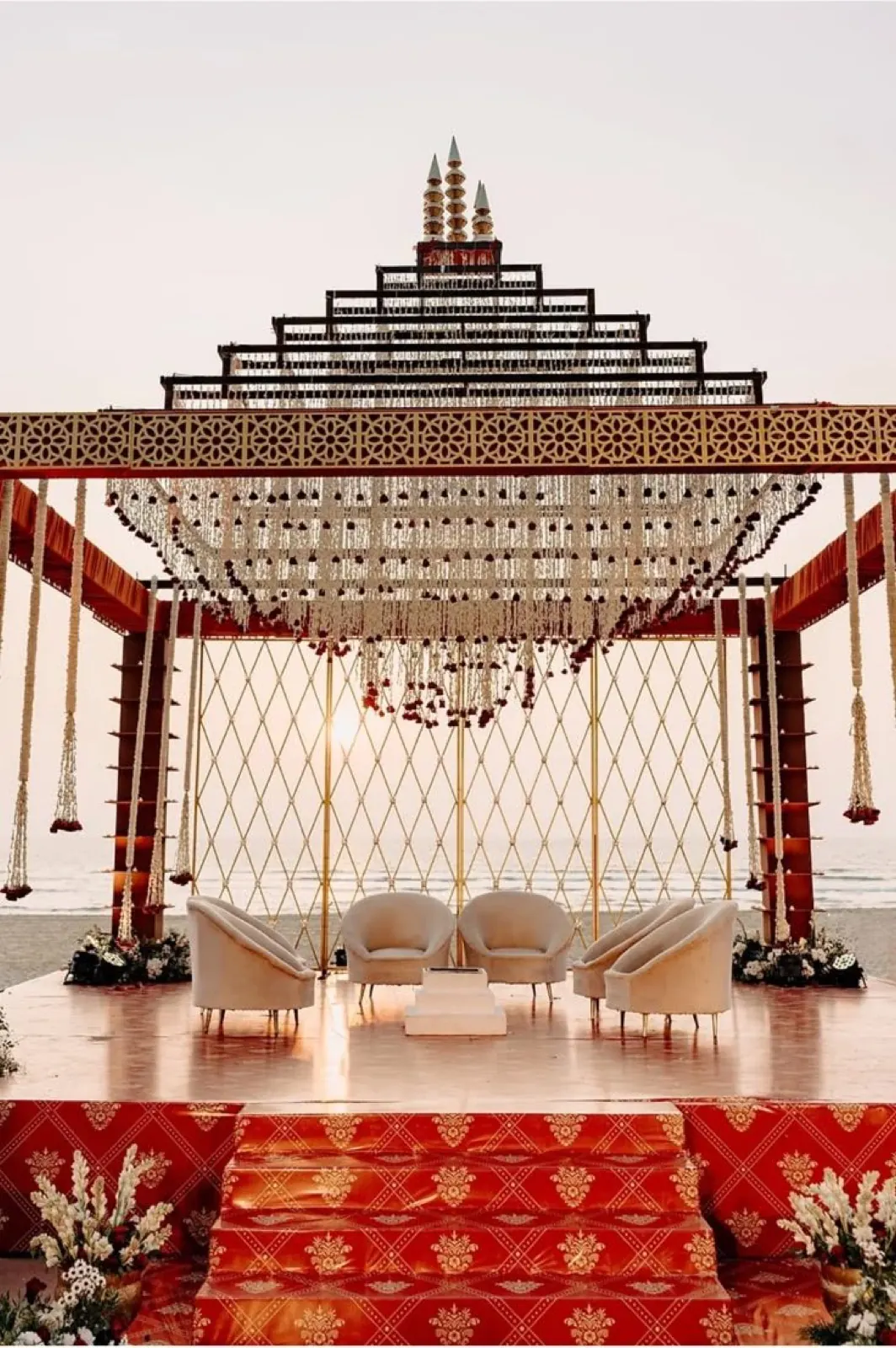
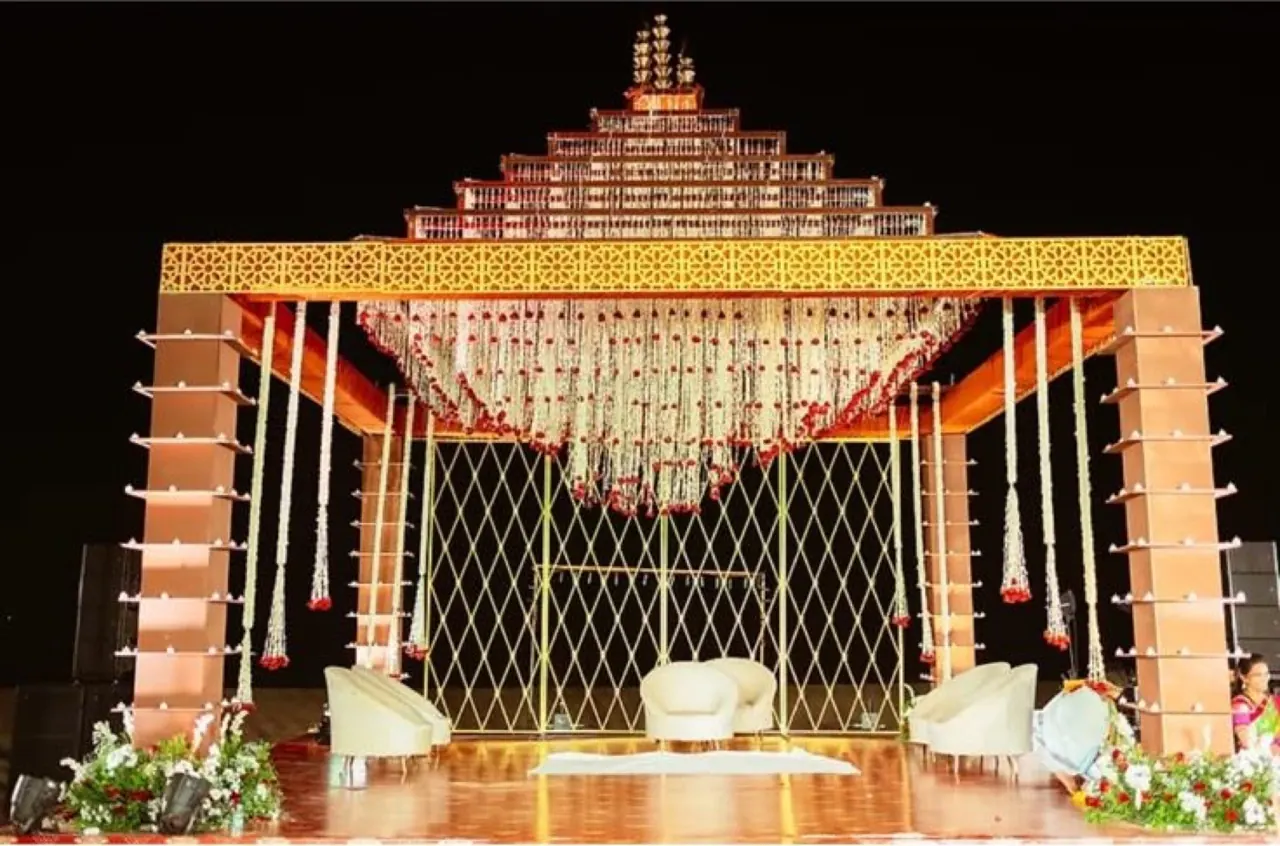
Every beach set-up in Goa is a wind problem before it is a design problem. The sea breeze is constant and strengthens through the afternoon. Those are exactly the hours a ceremony occupies. On the sand, anything tall gets weighted below the sand line, florals are chosen for stems that will not shred by six o'clock, and fabric is either engineered or omitted. A lawn sits behind the first line of buildings and palms, which breaks the wind enough to change what can be built: taller structures, hung installations, candles that stay lit. If the design in your head involves height or draping, the lawn is telling you something.
Sound
Two separate facts here. First, the breeze carries sound sideways: on the sand, an aisle laid without thinking about wind direction puts the celebrant's microphone downwind and the vows go to sea. We run the aisle so the breeze crosses the guests rather than the microphone — a free decision that saves an expensive problem. Second, the rule that governs both settings equally: amplified music outdoors stops at 10pm across Goa, beach and lawn alike, with a short list of notified days that run to midnight. Neither choice buys you a later night outdoors; the night ends indoors either way, and the venues that host well have that room ready.
Sand
Sand is the honest cost of the beach. Heels do not work on it, wheelchairs and grandparents' walkers struggle, chair legs sink unless the seating is planned for it, and dinner service for hundreds of guests on sand is hard enough that the reception almost always moves to the property behind the beach anyway. There is also paperwork under the sand: what stands on a Goa beach is decided by the village panchayat that stretch belongs to, everything built must be temporary and weighted rather than dug in, and the file opens six to eight weeks out — the sequence is in the beach guide. A lawn ceremony needs none of that file, runs on level ground with power at hand, and, at the right property, keeps the sea in the frame regardless.
Light
The beach's unanswerable argument. Goa faces west, so the sun sets over the water — a lawn can frame that; only the sand stands in it. A late-afternoon beach ceremony, timed against the tide table for the date, lands the vows as the heat breaks and the couple's portraits exactly in the golden hour, with the blue hour after sunset as a second act. The tide is a real constraint: a high tide at six can take back a third of the ceremony ground measured that morning, which is why we set ceremony times from the tide table, not the invitation printer. The month-by-month logic of the sunset hour has its own post.
How we actually decide it with couples
Guest list first: many elders, mobility concerns or a very large ceremony leans lawn. Design second: height and drape lean lawn, horizon and bare-foot ceremony lean beach. Calendar third: November to March opens both, the shoulder months favour whichever option carries better cover. And at properties with both, the best answer is often the split this state was made for — vows on the sand at golden hour, everything else on the lawn and indoors. Lindsay & Dharmin's weekend at the St. Regis ran exactly that shape, and the photographs make the case better than this page can.

Keep reading
The guides behind this post
Venues mentioned
More from the journal
Questions this post gets asked
Can the whole wedding happen on the beach?
The ceremony, yes. Dinner and the reception almost always move to the property behind the sand — service for hundreds of guests on sand is genuinely hard, and the 10pm outdoor sound rule ends the open-air half of the night regardless. Plan the beach as the ceremony's stage, not the whole night's.
Do lawn ceremonies need panchayat permission too?
A lawn inside the venue's own property runs on the venue's licences, which is one of its quiet advantages. The beach in front of the same venue belongs to the village panchayat's jurisdiction, and what may stand on it is that panchayat's decision — settled before you sign, not after.
What time should a beach ceremony start?
Late afternoon, worked backwards from the sunset and the tide table for the specific date — Goa's sunsets fall roughly between six and seven across the year. The aim is vows as the heat breaks and portraits in the golden hour; the exact hour shifts by month and by tide, which is why we check both before the invitation prints.
Ask us about your wedding
We will come back with what it holds, what it costs on your dates, and whether it is the right room for the wedding you are describing.
- A call from the Goa team within one working day.
- A written scope and a fee band for your wedding, in your inbox.
- A video walkthrough of the shortlist if you are abroad.