
The sunset hour: timing a Goa ceremony by month
By The Goa Wedding Co. · 17 August 2026 · 6 min read
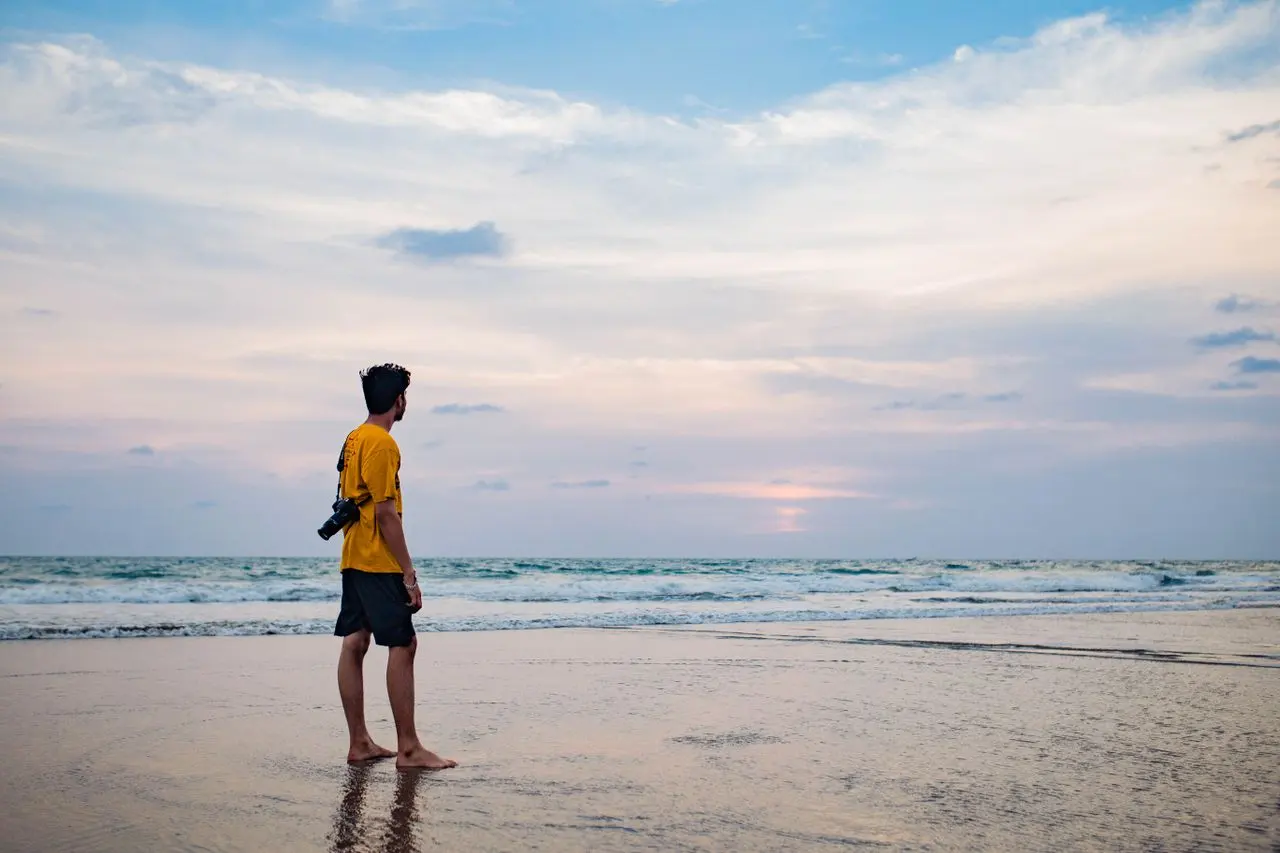
Goa's coast faces west, so the sun sets over the sea — and sunset falls roughly between six and seven in the evening across the year, a narrow band by world standards. Plan an outdoor ceremony backwards from that hour: vows in the last stretch of soft light as the heat breaks, couple portraits landing in the golden hour, and the blue hour after sunset as a second act. Confirm the exact sunset and the tide table for your specific date before the invitation prints.
The one fact that organises the whole day
Goa faces west. The sun sets over the water, which is the whole photographic argument for a coastal ceremony, and because the state sits deep in the tropics the sunset does not wander far: across the year it falls roughly between six and seven in the evening. That narrow band is a planner's gift. In much of the world an outdoor ceremony must be re-timed season by season; in Goa the shape of the evening holds, and only the details shift by month.
Backwards is the only direction
The method, whatever the month: fix the ceremony's anchor hour, a muhurtham where one applies and the light where it does not, then walk everything backwards from it. Make-up start times, family photographs, the procession forming up, transfers if any function moves: all of it schedules in reverse from the anchor, with buffers where reality lives, because getting-ready always overruns. Our run-of-show guide works a full three-day version; a late-afternoon start that puts vows on the sand as the heat breaks, with portraits landing in the last soft light, is the reliable shape.
The three lights of a Goa evening
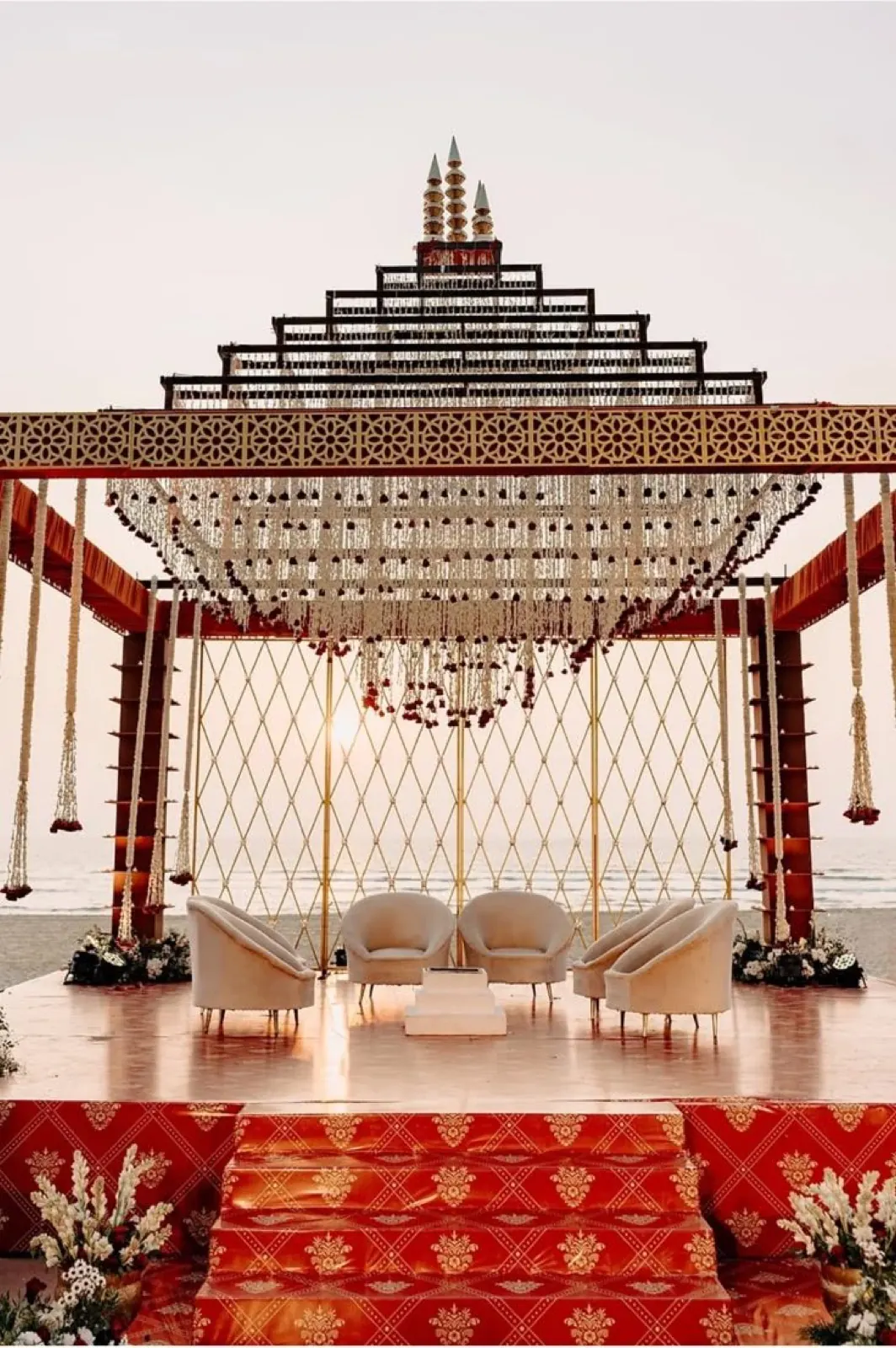
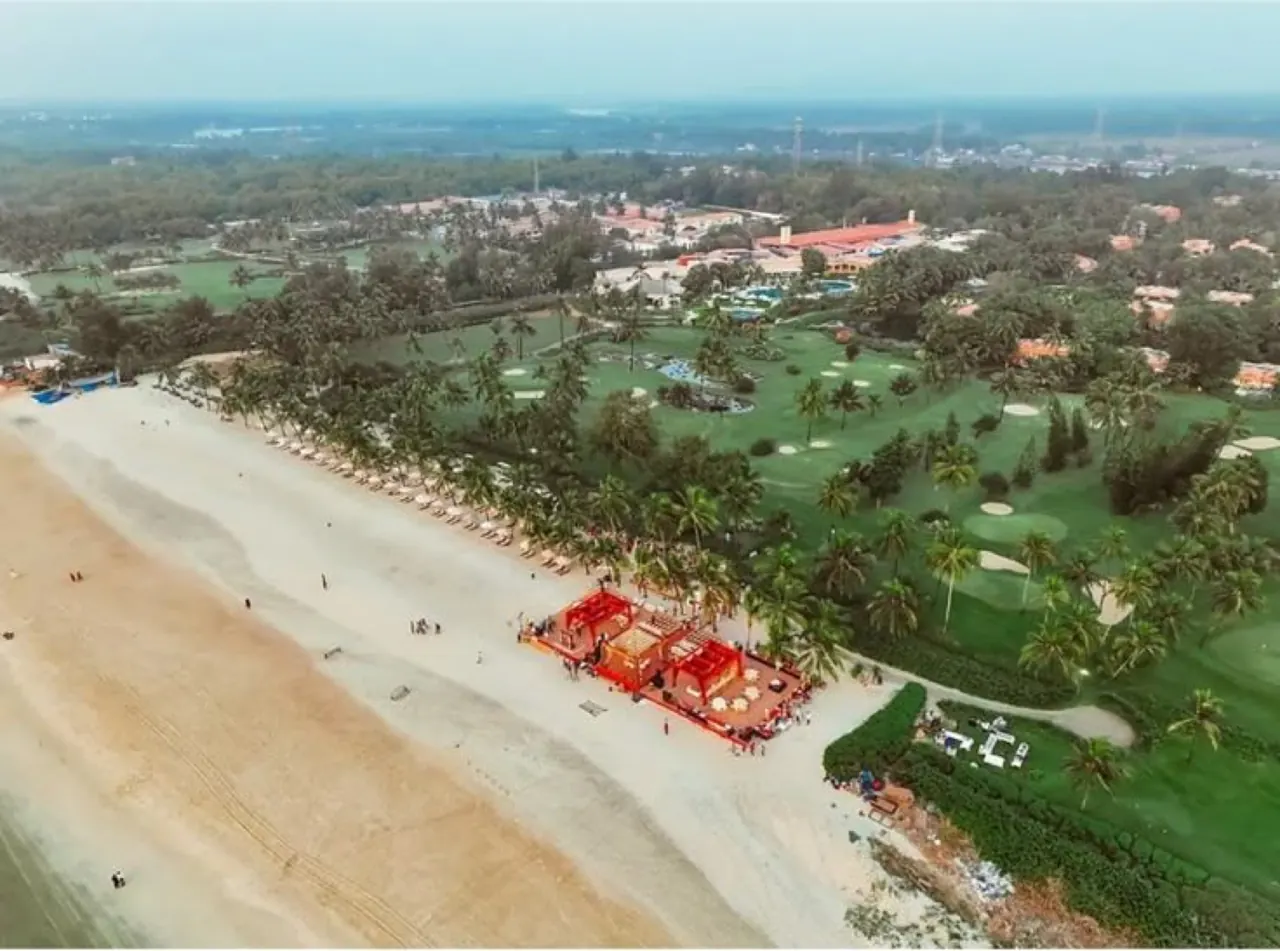
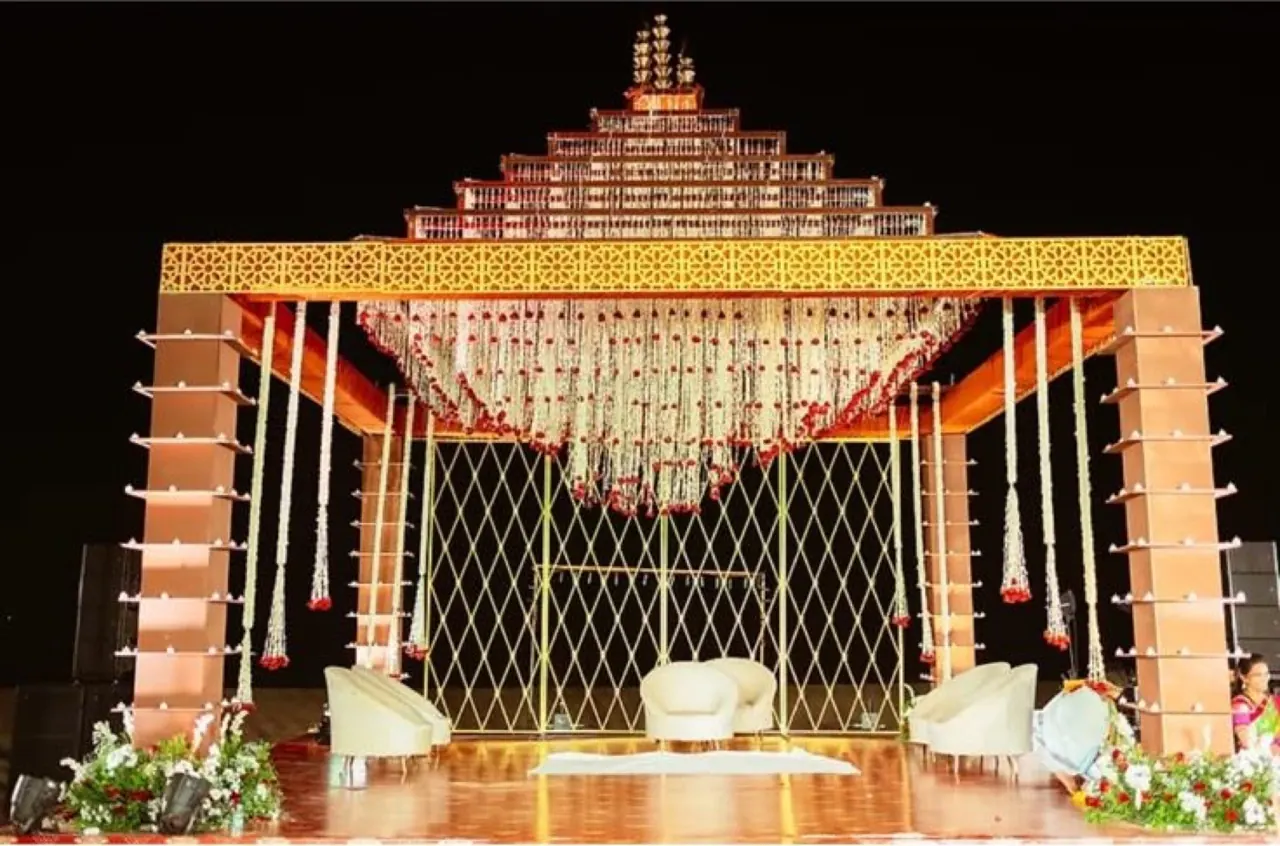
The hour before sunset is the golden hour: warm, low, flattering, and the reason every photographer lobbies for a late ceremony. Sunset itself is the anchor frame, the one the mandap was sited for. Then Goa serves a third act many couples do not plan for: the blue hour after the sun goes, when the west-facing sky holds colour over the water and a lit build gets its second rendering. A ceremony that ends at sunset wastes that act; one that flows into portraits and the first evening moments uses all three. Lindsay & Dharmin's gopuram mandap was designed for exactly this double life — sunset for the vows, full illumination after dark.
What shifts by month
Qualitatively, three things. The heat's edge: in the dry season's core, November to February, the late afternoon cools decisively, so a ceremony can start earlier without cooking its guests; in the warmer shoulder months the start pushes later, tighter against the sunset. The sky itself: peak-season air is dry and clear, while October's post-monsoon skies carry cloud that can turn a plain sunset into a spectacular one — or mute it, which is the honest trade. And the calendar around the light: on October and shoulder dates, the rain plan's covered fallback quietly shadows the sunset plan.
The tide has a vote
On the sand, the sun shares authority with the sea. A high tide at six can take back a third of the ceremony ground measured that morning, which moves the mandap line, the aisle length and sometimes the hour itself. We set beach ceremony times against the tide table for the specific date, which is also how the sun ends up where you want it in the photographs, and we check it before the invitation prints, not after. Lawn ceremonies skip this entirely, which is one of the quiet points in the beach-or-lawn decision.
The practical sequence
When a date is chosen: look up the actual sunset time for that date, not the month's folklore. Check the tide table if the ceremony touches sand. Set the anchor hour with the photographer in the room, because the golden hour is their raw material. Then print the schedule backwards from the anchor and defend the start time on the day — the first event of a wedding day starts on time or the day never recovers. None of this costs anything, and it decides more of the photographs than the decor budget does.
Keep reading
The guides behind this post
Venues mentioned
More from the journal
Questions this post gets asked
What time do Goa sunsets happen?
Roughly between six and seven in the evening across the year — Goa sits deep in the tropics, so the sunset hour moves within a narrow band rather than swinging with the seasons. Look up the exact time for your specific date once it is chosen; the difference of twenty minutes matters to a ceremony planned against the light.
When should an outdoor Goa ceremony start?
Late afternoon, worked backwards from the sunset: vows in the last stretch of soft light as the heat breaks, portraits landing in the golden hour. In the cool core of the season the start can sit earlier; in warmer months it pushes tighter against the sunset. On sand, the tide table for the date gets a vote too.
Is a sunset ceremony possible in every month?
The light is there year-round — the constraint is the weather around it. November to March offers the sunset with near-certainty; October adds dramatic post-monsoon skies with a small shower risk and a light fallback; June to September is the monsoon, when the covered plan leads and a visible sunset is a bonus rather than a promise.
Ask us about your wedding
We will come back with what it holds, what it costs on your dates, and whether it is the right room for the wedding you are describing.
- A call from the Goa team within one working day.
- A written scope and a fee band for your wedding, in your inbox.
- A video walkthrough of the shortlist if you are abroad.